
Common Accounting Mistakes Small Businesses Make and How Software Solves Them
Running a small business is no easy task. Between managing operations, sales, and customer relationships, accounting often gets pushed to the background. Unfortunately, even small accounting mistakes can lead to serious financial and compliance issues.
In this blog, we’ll explore the most common accounting mistakes small businesses make and how modern accounting software can solve them effectively.
1.Mixing Personal and Business Finances

The Mistake: Many small business owners use the same bank account for personal and business transactions. This creates confusion and makes tracking expenses difficult.
How Software Helps:
- Separate accounts clearly
- Track business-only transactions
- Generate accurate financial reports
2.Not Maintaining Proper Records

The Mistake: Failing to record all transactions or losing bills and invoices can lead to incorrect financial statements.
How Software Helps:
- Automated data entry
- Digital invoice storage
- Easy document retrieval
3.Manual Accounting Errors
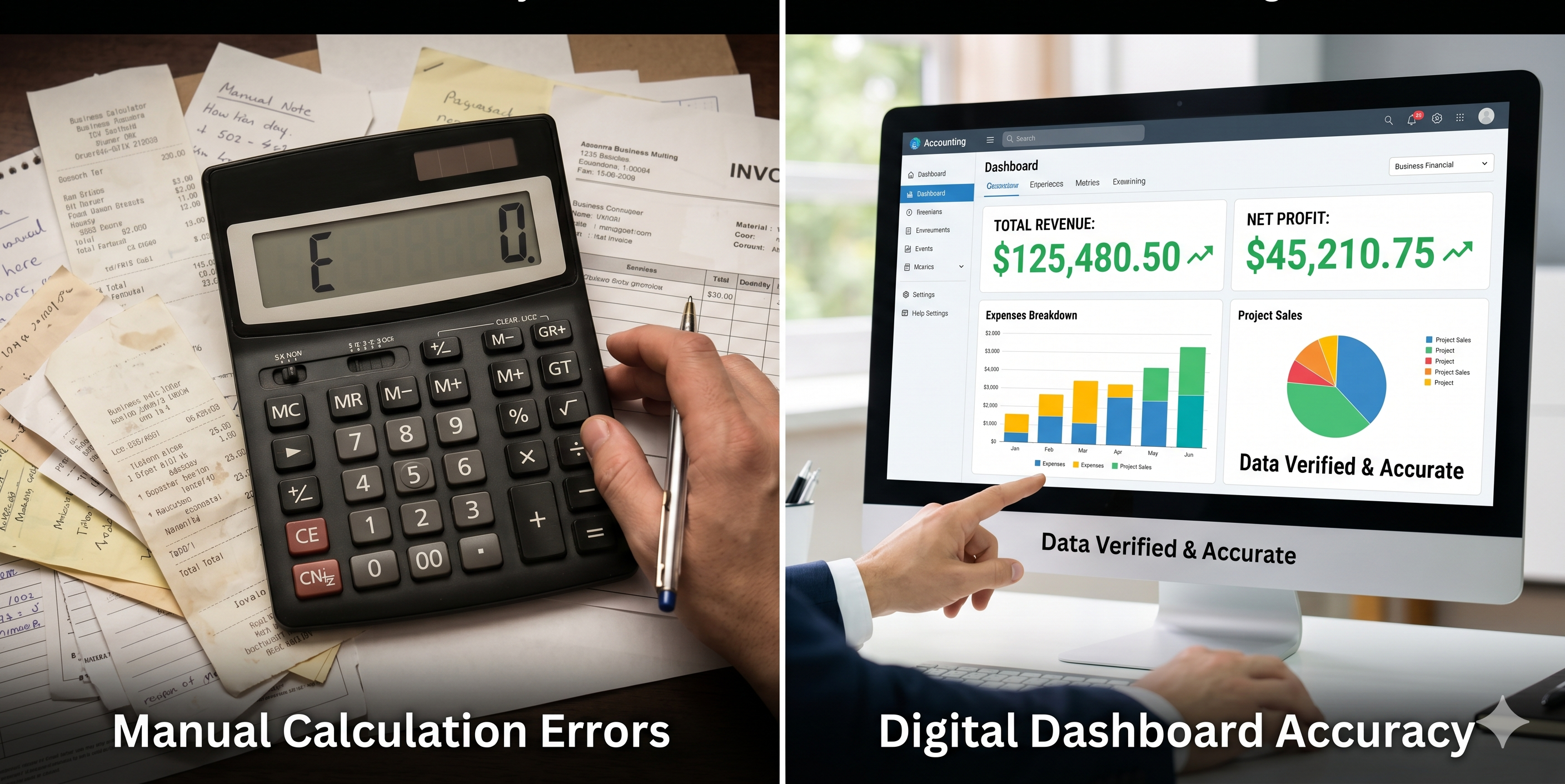
The Mistake: Manual calculations in Excel or notebooks often result in human errors.
How Software Helps:
- Automated calculations
- Real-time updates
- Error reduction
4.Ignoring GST Compliance
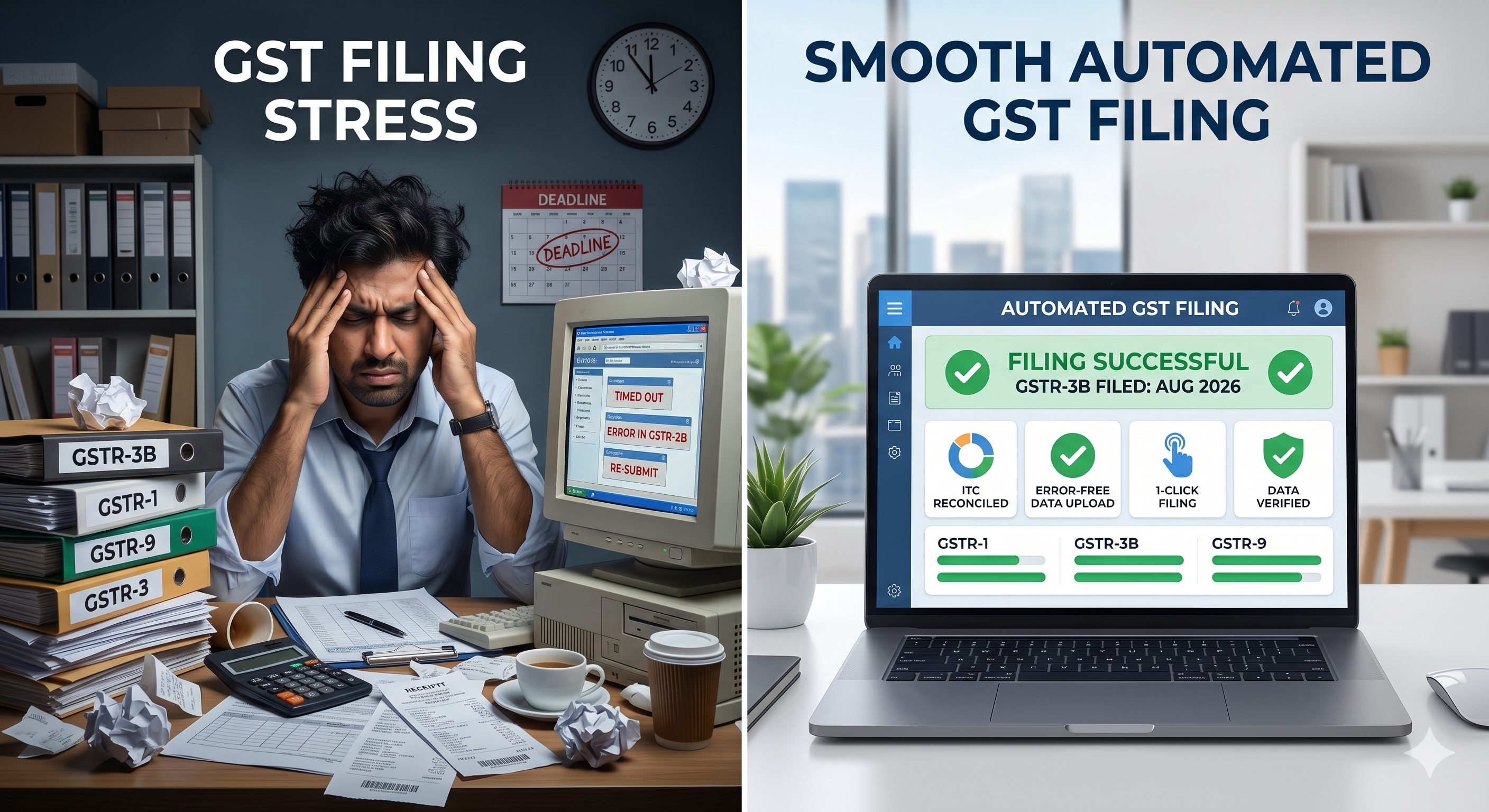
The Mistake: Missing GST filings, incorrect tax calculations, or non-compliance can result in penalties.
How Software Helps:
- Auto GST calculation
- GST return filing support
- Error-free tax reports
5.Poor Cash Flow Management

The Mistake: Not tracking cash flow properly can lead to liquidity problems.
How Software Helps:
- Cash flow reports
- Payment reminders
- Receivable & payable tracking
6.Delayed Invoicing
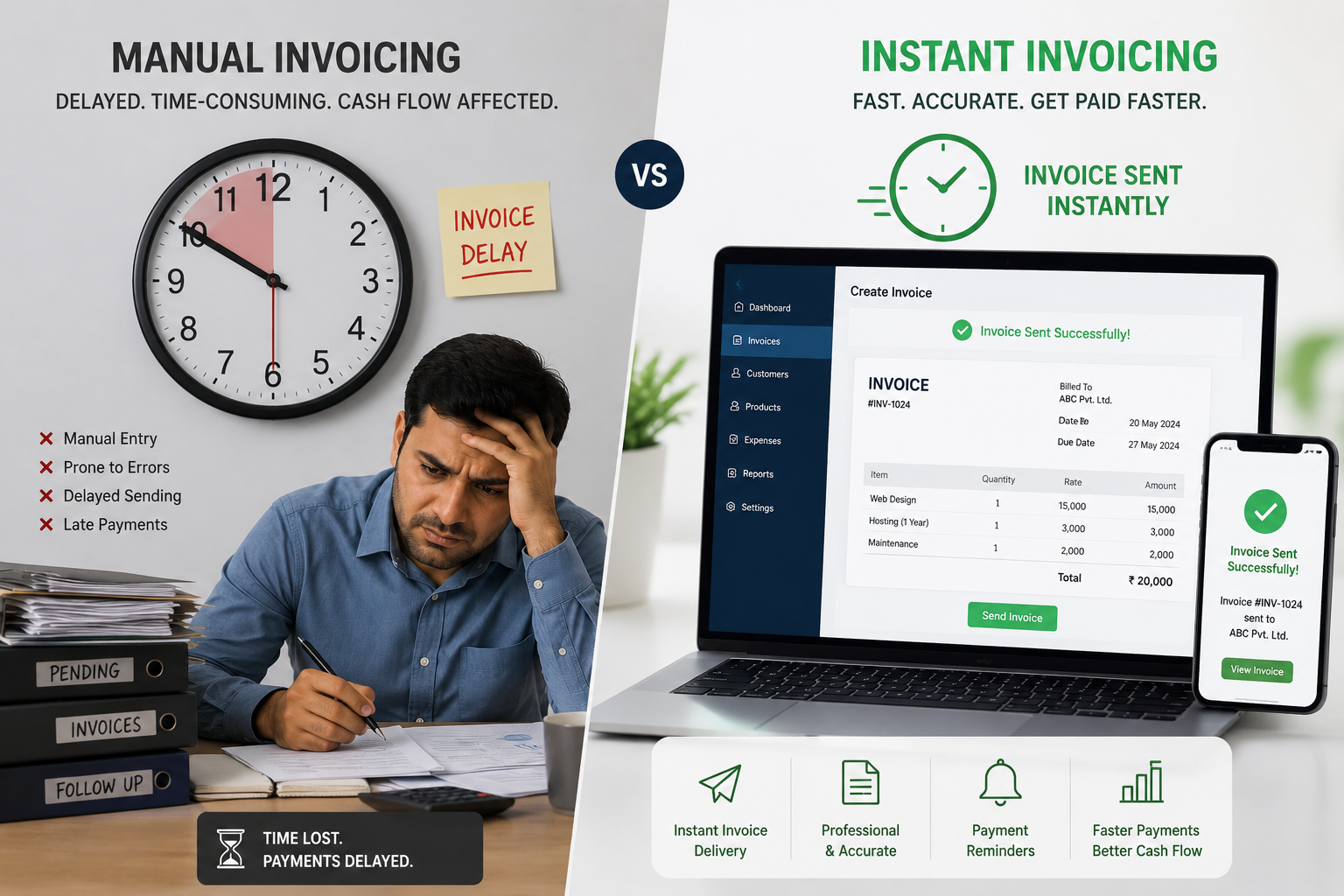
The Mistake: Late invoicing leads to delayed payments and affects business cash flow.
How Software Helps:
- Instant invoice generation
- Automated reminders
- Online payment integration
7.Lack of Financial Insights

The Mistake: Without proper reports, business owners struggle to make informed decisions.
How Software Helps:
- Profit & loss reports
- Balance sheets
- Business performance dashboards
8.Not Backing Up Financial Data

The Mistake: Data loss due to system failure or human error can be disastrous.
How Software Helps:
- Cloud backup
- Data security
- Easy recovery
Why Small Businesses Should Switch to Accounting Software
Popular tools like Tally, Busy, and cloud-based solutions are designed specifically for Indian businesses and GST requirements.
Final Thoughts
Accounting mistakes can cost your business time, money, and peace of mind. The good news? Most of these mistakes are avoidable with the right tools.
Investing in accounting software not only simplifies your financial management but also gives you the confidence to focus on growing your business.
Looking for the right accounting software for your business?
👉 Contact us today for expert consultation, implementation, and support services tailored to your needs.
Two unidentified portraits in our family collection have led to a discussion about facial outlines. A small change in head position makes the jaw look noticeably different between the pictures. I want to describe visible proportions without treating a face category as proof of identity. Cheek width, forehead width and overall length seem worth noting separately in the record. I have bookmarked face shape calculator as a possible comparison reference. First, I need a consistent rule for recording uncertainty when the camera angle is unclear. I can prepare comparison copies while keeping the original framing visible for anyone reviewing the notes. Would a short observation sheet be a reasonable starting point for comparing these portraits? The most useful result would be a transparent note that another relative can review later. The notes should remain understandable without access to our earlier conversation.
Everything is well organized and the gaming experience is top notch. It is a very reliable place for anyone looking for excitement. Visit vnhitclubinc
This place feels like a high-end casino right from your living room. The graphics are top-notch and the bonuses are actually fair. Definitely spending my weekends at krwincasino.
Our community craft session includes making paper masks, and I am revising the worksheet we use before cutting the templates. The standard outline is easy to copy, although it does not explain which parts should be adjusted for a particular wearer. I am considering a short explanation of face shapes as background for that worksheet. My intention is to use the categories for describing contours, then measure each participant rather than infer sizes from a label. I am thinking of adding a small outline sketch where people can mark width and jaw contours before choosing a template. We plan to try the undecorated paper pieces first, so changes to the contour can happen before anyone starts painting. I also want participants to feel free to disagree with a label if another description better matches their own observations. People can choose a stylized final mask, but I want their starting notes to be clear enough for useful adjustments. Which parts of the face outline would you ask participants to note before they begin adjusting a basic paper template?